
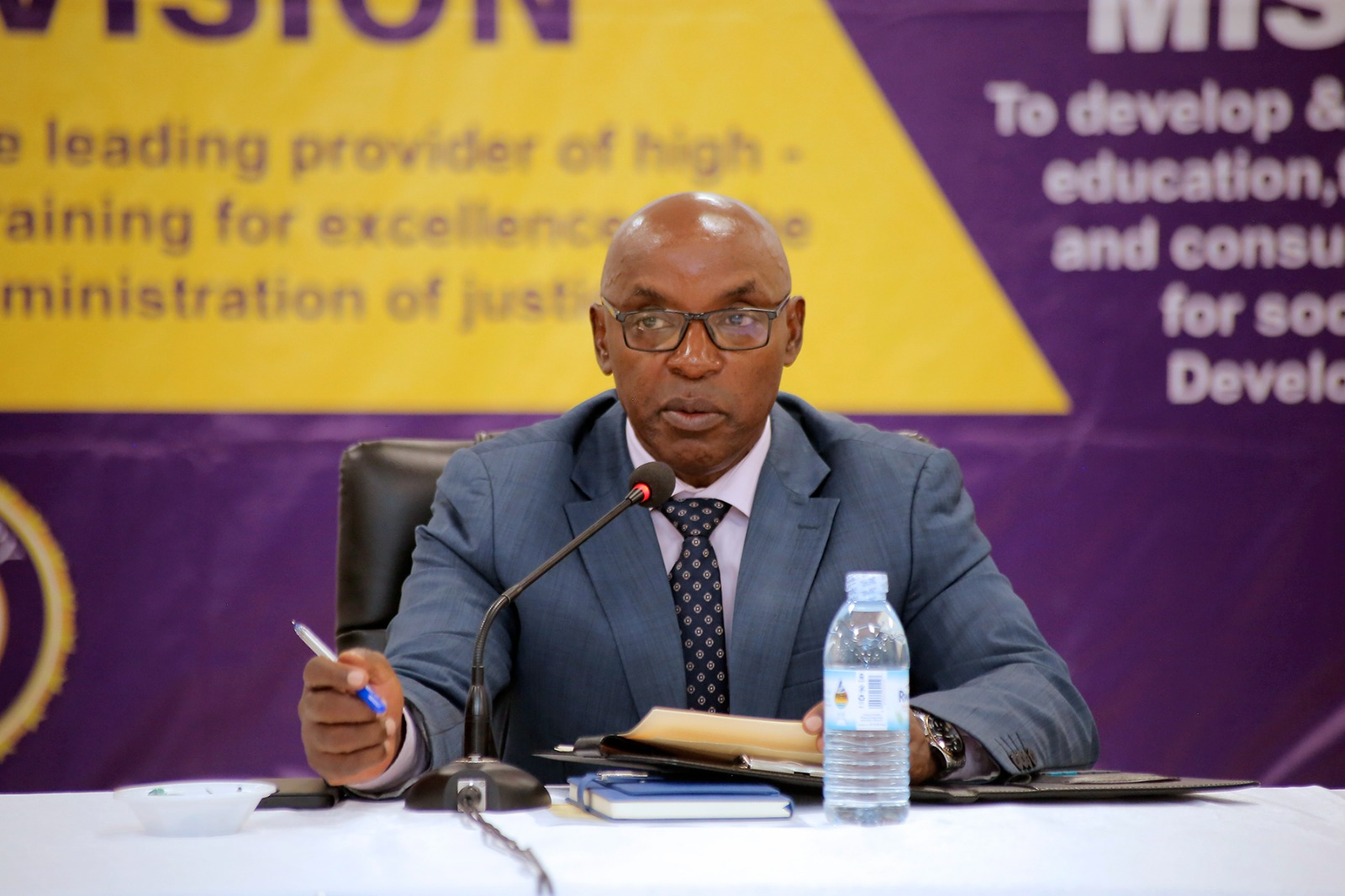
KAMPALA — Chief Justice Flavian Zeija has called for a decisive shift in Uganda’s justice system, urging judicial officers to aggressively tackle case backlog through stronger case management, mediation, and alternative justice mechanisms.
He made the remarks while opening a training session organised by the Judicial Training Institute on the Civil Procedure (Amendment) Rules, 2019, Alternative Dispute Resolution (ADR), and Alternative Justice Systems (AJS).
Justice Zeija said Ugandans increasingly expect a justice system that is timely, transparent, and efficient, warning that delays in case resolution continue to undermine public trust in the Judiciary.
“We gather today not merely to study mediation and new rules, but to internalize a shift in our judicial culture. For too long, the ghost of case backlog has haunted our corridors, eroding public trust in the administration of justice,” he said.
He explained that the 2019 Civil Procedure amendments are designed to simplify litigation, reduce delays, and ensure that cases are concluded within reasonable timeframes.
Under the revised framework, litigants are required to take more responsibility for progressing their cases.
Justice Zeija highlighted the introduction of Summons for Directions under Order 11A, which requires plaintiffs to act within 28 days after the last pleading or risk their cases abating automatically.
He added that the reforms also require witness statements to be filed before hearings begin, a measure aimed at eliminating surprise testimony and streamlining cross-examination to shorten trial duration.
The Chief Justice also emphasised the expanded role of registrars, describing them as “pre-trial commanders” responsible for managing scheduling conferences and interlocutory matters before cases proceed to full hearing.
A major focus of his address was the growing centrality of mediation in the justice system. He said Alternative Dispute Resolution is no longer optional but an integral part of case management and must be actively applied at the earliest stages of litigation.
“ADR is no longer just a suggestion; it is integrated into the core case management cycle. The Summons for Directions stage is the primary point for ADR referral,” he said.
Justice Zeija urged judicial officers to screen cases early to identify those suitable for settlement through mediation, saying this would significantly reduce the burden on courts.
He also raised concerns about accountability in the mediation process, particularly regarding payment of mediators without evidence of meaningful work.
Going forward, he said, mediators should only be compensated upon submission of detailed reports showing genuine mediation activity.
“Going forward, there must be no payment for mediation without a properly filed mediation report. The report must include the number of sessions conducted, when and where they were conducted, the time taken in each session, and an attendance register signed by the parties or their representatives,” he said.
Justice Zeija further directed that courts using the Electronic Court Case Management Information System (ECCMIS) must ensure all mediation records are properly uploaded to improve transparency and oversight.
He urged judicial officers to fully embrace the reforms as tools for eliminating delays and improving efficiency across the justice system.
“As I conclude, let me point out that the Amendment Rules combined with ADR and AJS are your weapons as judicial officers at all levels. Use them to strike down delay. Use them to restore the dignity of the Ugandan Judiciary,” he said.
The training, attended by judicial officers from across the country, aims to strengthen implementation of the amended civil procedure rules and enhance the use of ADR and AJS mechanisms to improve access to justice.
